The State of the Union Rebuttal: A Stark Divide in Perceptions
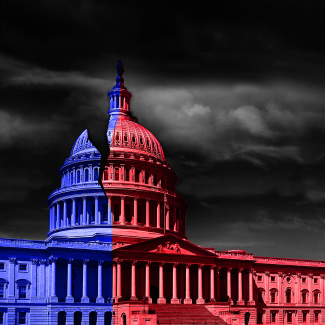
The State of the Union rebuttal is a notoriously thankless assignment. It follows the pageantry of a presidential address to a joint session of Congress, arriving when viewer energy has ebbed and the response setting feels comparatively modest. Virginia Gov. Abigail Spanberger, fresh in her new role, did what she could with the platform. Yet her remarks underscored a deeper national fracture. Americans are confronting the same set of facts but drawing sharply different conclusions.
Spanberger built her response around three pointed questions. Is the president working to make life more affordable for you and your family? Is he working to keep Americans safe, both at home and abroad? Is he working for you?
Honest brokers cannot pretend President Trump's second term has been free of controversy or turbulence. But Mr. Trump assesses his performance by a simple, consistent standard, whether America is winning. By that measure, and on the evidence, the answers to Spanberger's questions point decisively in the affirmative.
The administration's drive to expand domestic energy production has helped rein in fuel and utility costs after prior volatility, delivering tangible relief to families and small businesses. Renewed border enforcement and immigration policies have confronted longstanding concerns about lawlessness and public safety that many felt were long ignored. These efforts fit into a larger pattern: trade measures to revive American manufacturing, direct challenges to distant federal bureaucracies, and a readiness to tackle entrenched problems without apology.
Both the president's address and the Democratic response were plainly geared toward the approaching midterm elections. Moments from the evening—Democrats remaining seated for broadly popular proposals, floor outbursts, protest signs—will almost certainly resurface in campaign ads over the coming months. In the next 24 hours, soundbites from the speech and rebuttal will be edited into targeted clips to fire up partisan bases.
The president branded Democrats "crazy"; some shouted back. Exchanges like these, which once would have consumed Washington for days (recall Rep. Joe Wilson's "You lie" interruption of President Obama), now pass with little sustained outrage. Decorum is the preference. But the priority is a president willing to fight for the country and call out what he and most voters view as crazy.
Republicans and Democrats alike emerged with midterm ammunition. Democrats, as Spanberger's rebuttal illustrates, appear convinced a "blue wave" is building. Yet they continue to underestimate how their deep hate for President Trump blinds them to voter perceptions of their own policy overreach. Parents feel sidelined in education decisions affecting their children. Workers see trade policies that tilt toward foreign competitors over domestic jobs. Communities contend with border approaches that seem to accommodate unlawful entry rather than enforce the law.
Polls show the president facing headwinds, including net-negative approval among independents who once backed him strongly. Still, CNN's instant viewer survey after the address found 64% saying the country is on the right track, a 10-point jump from pre-speech levels.
Until Democrats can message around something other than their animus toward Trump, their persistently low approval numbers, and the broader disconnect with voters, will endure. Even as some voters sour on the president, many view Democrats' motives as purely political and lacking integrity. Recent polling bears this out. An aggregate of surveys tracked by RealClearPolling through late February 2026 shows the Democratic Party with just 36% favorability and 57% unfavorability among voters, a net negative of more than 20 points that reflects deep dissatisfaction even beyond the base.
The State of the Union did not bridge the divide. It exposed it further. Democrats' unwillingness to stand for broadly popular measures, many aligned with the priorities Spanberger herself raised, likely gave viewers an unintended answer to her questions. Yes, many Americans do believe Trump is fighting for them. That visual alone laid bare the stark differences between the two parties. The midterms will test whose vision of America ultimately prevails.